As Google prepares to bring AI-powered commerce into food ordering, restaurant operators face a new challenge: making sure their business data is connected, accurate, and ready to support the next generation of technology.
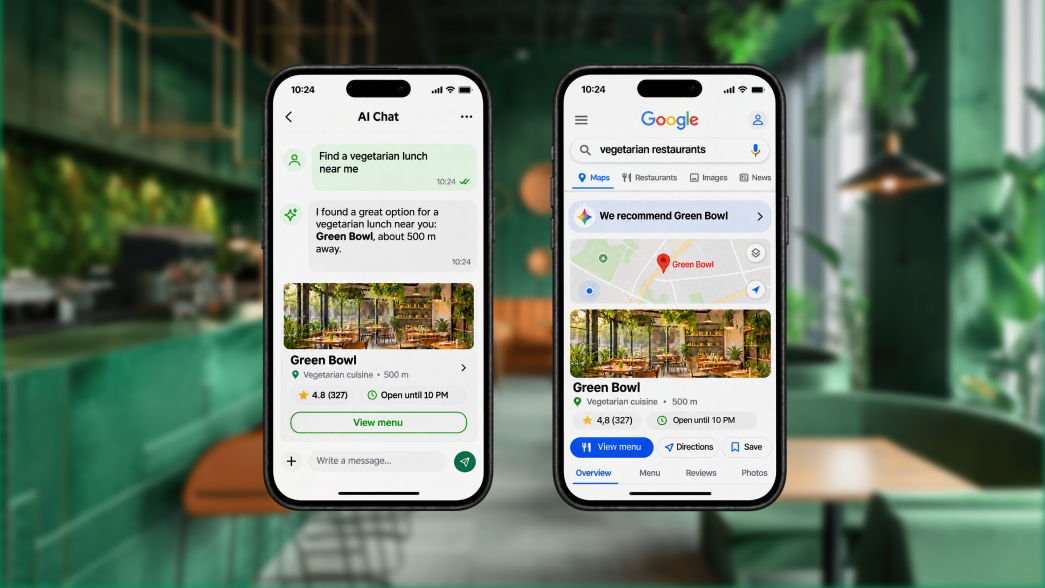
Imagine a customer asking Google to find a nearby restaurant that delivers a vegetarian lunch for under €20. The customer has specific dietary preferences, wants the order delivered within 30 minutes, and would rather complete everything in the same conversation.
Today, this usually involves moving between search results, restaurant websites, menus, and ordering platforms. That experience could soon look very different.
With the introduction of the Universal Commerce Protocol (UCP), Google is developing the infrastructure for AI assistants to help customers discover products and services, make selections, and complete purchases within a conversational experience.
The initial focus has been on retail, but Google has also announced plans to expand these capabilities into restaurant ordering and hotel bookings.
For the hospitality industry, this raises some interesting questions. How will customers discover restaurants in the future? What information will AI assistants need to recommend a meal accurately? And how prepared are restaurant businesses to operate in an environment where data increasingly influences both customer experience and operational performance?
The answers begin with something restaurant operators already have in abundance: data.
What Is Google’s Universal Commerce Protocol?
Google introduced the Universal Commerce Protocol in January 2026 as an open standard designed to support AI-powered shopping experiences.
UCP creates a common framework through which AI agents, merchants, and payment providers can interact. Its goal is to make the purchasing process more connected, allowing customers to move from discovering a product to completing a transaction with fewer interruptions.
The concept is part of a broader development known as agentic commerce, where AI assistants can help users carry out shopping tasks.
Google has also announced plans to extend this approach to local food delivery, including experiences where customers could browse restaurant menus, customize meals, and place orders through conversational interfaces.
As of November 2026, food-specific capabilities are still described in Google’s developer documentation as upcoming. Their availability will depend on Google’s rollout, participating partners, and supported markets.
Even at this early stage, the implications for restaurants are worth considering. Online ordering has already changed how restaurants attract customers and generate revenue. AI-assisted commerce could introduce another important shift in the customer journey.
How Could AI-Powered Commerce Change Restaurant Ordering?
Restaurant discovery could become more personal
Customers already use Google to find restaurants, check opening hours, compare reviews, and explore menus. With conversational AI, searches could become much more specific.
Instead of typing “best lunch near me,” someone might ask: “Find a restaurant that delivers to my office, has high-protein lunch options, costs less than €15 per person, and can deliver before 1 PM.”
An AI assistant would need to evaluate several pieces of information to make a useful recommendation, including location, menu availability, prices, dietary information, and delivery options.
For restaurant operators, this creates a new reason to maintain accurate, structured, and up-to-date digital information. If a menu item is no longer available, a price has changed, or a location does not offer delivery, the systems handling these requests need reliable information.
The quality of restaurant data could have a direct influence on the quality of the customer experience.
Ordering could become more convenient
A typical online order involves several steps. Customers find a restaurant, open its menu, browse products, select modifications, choose a fulfillment method, and complete payment.
AI-powered commerce aims to simplify some of these interactions. A customer could potentially ask an assistant to recommend a meal, adjust ingredients, select a delivery option, and help complete the order.
This creates opportunities for restaurants to reach customers at the moment they are ready to buy. It also introduces new operational requirements.
Menu information, product availability, pricing, modifiers, and ordering conditions need to remain consistent across the systems involved. When information is fragmented or outdated, even a well-designed customer experience can break down.
Restaurants will need better visibility into their digital channels
Most restaurant operators already manage several sales channels: dine-in, takeaway, delivery platforms, websites, mobile applications, and self-service kiosks.
AI-assisted ordering could eventually become another source of transactions. For multi-location operators, understanding the performance of these channels is essential.
Which channels attract new customers? Which generate the highest average ticket? Where are promotional costs increasing? How do ordering channels influence margins?
Answering these questions requires information from multiple systems. As the number of digital touchpoints grows, maintaining a complete picture of sales and profitability becomes increasingly important.
Restaurants Have Plenty of Data. The Challenge Is Connecting It.
A restaurant business generates valuable information every day.
The POS system records transactions, sales trends, and product performance. Inventory software tracks stock movements, ingredient consumption, and food costs. Loyalty applications provide information about customer behavior and repeat visits.
Marketing platforms measure campaign performance. Digital ordering systems capture channel-specific sales. Accounting and ERP applications provide financial information.
Each system serves an important operational purpose. Problems arise when managers need to understand how all these elements influence one another.
Consider a restaurant where revenue increased by 12% last month. At first glance, that looks like good news.
But what happened to food cost? Did ingredient prices increase? Was the growth driven by heavily discounted products? Did delivery commissions affect profitability? Were the additional sales generated by new customers or existing ones?
A standard sales report cannot answer all these questions. Managers often need to export information from several systems, combine spreadsheets, and investigate the numbers manually.
For a restaurant group managing dozens of locations, this process can become a significant operational burden. The business has the information it needs, but obtaining a complete picture takes time.
And when answers arrive too late, opportunities to improve performance may already have been missed.
Why Data Readiness Matters for AI
AI has introduced new possibilities for business analysis. Managers can increasingly ask questions in natural language, generate visualizations, identify patterns, and explore potential causes behind changes in performance.
The usefulness of these capabilities depends on the information available to the system.
Imagine asking an AI assistant: “Which of our restaurants was the most profitable last month?”
If the assistant only has access to POS transactions, it can identify the restaurant with the highest revenue. But revenue alone cannot establish profitability.
A meaningful answer may also require information about ingredient consumption, purchase costs, operating expenses, and other financial indicators.
The same applies to food cost analysis. If a manager asks why food cost increased, the system needs more than a percentage from a dashboard. It may need to examine changes in supplier prices, recipe costs, inventory consumption, waste, and sales mix.
Customer analytics creates similar challenges. Understanding why loyal customers are visiting less frequently requires historical transactions, customer segments, loyalty activity, and potentially marketing campaign information.
The more complete and reliable the underlying data, the more useful the analysis can become.
This is why data readiness deserves attention before companies invest heavily in more advanced AI applications.
Restaurant data does not necessarily need to be stored in one physical database. However, it needs to be connected through reliable integrations, organized around consistent business definitions, kept up to date, and accessible according to appropriate permissions.
Without that foundation, AI systems risk producing incomplete or misleading interpretations.
From Restaurant Reporting to Better Operational Decisions
For years, restaurant reporting has focused primarily on tracking performance. Managers review revenue, transaction volumes, average ticket, food cost, stock consumption, and profitability. These indicators remain essential.
What is changing is how managers can interact with them.
Instead of navigating multiple reports to investigate a problem, a restaurant operator could ask: “Why did sales drop yesterday?”
A connected analytics system could examine changes in transaction volumes, average ticket, sales channels, and product availability to help explain what happened.
A regional manager could ask: “Which locations have the highest food cost this month?”
Or a marketing director might want to know: “Which campaigns generated the highest revenue from returning customers?”
These questions are already part of everyday restaurant management. AI can make the analysis behind them more accessible, particularly for people who don’t work with spreadsheets or business intelligence tools every day.
Another important development is proactive monitoring. Rather than waiting for someone to notice an unusual change in a report, analytics platforms can increasingly identify anomalies and bring them to the attention of the relevant manager.
Unexpected food cost increases, unusual discount patterns, declining customer activity, or changes in sales performance can become signals worth investigating.
For restaurant groups, faster access to this information can help teams prioritize their attention and make more informed decisions.
Introducing Breeze AI Analytics: Turning Restaurant Data Into Insights
At Bitsoft, we see connected data as an essential part of the next generation of restaurant management.
This thinking is behind Breeze AI Analytics, our new business intelligence platform designed for restaurant operators and multi-location hospitality businesses.
Breeze AI Analytics brings together information from across the restaurant ecosystem, helping management teams understand performance without relying on disconnected reports.
The platform is designed to integrate data from Breeze POS, KeepApp inventory management, loyalty applications, Tempo Marketing Automation, self-service kiosks, digital ordering channels, and connected ERP or accounting systems.
This creates a more consistent view of the business, combining commercial, operational, customer, and financial information.
A clearer view of every restaurant
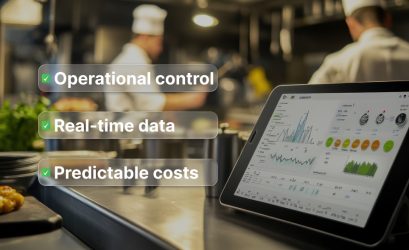
Breeze AI Analytics provides predefined dashboards for important performance indicators, including sales, average ticket value, product performance, inventory, food cost, customer loyalty, and profitability.
For restaurant groups, this makes it easier to compare locations, identify performance differences, and monitor business results across the network.
Management teams can work with the indicators relevant to their responsibilities, while permission controls determine access to dashboards and data.
Ask questions instead of building reports
One of the key capabilities of Breeze AI Analytics is the ability to interact with business data through natural language.
A restaurant operator could ask: “Why did food cost increase this week?” “Which products generated the highest margins last month?” “How are our locations performing compared with the previous period?” “Are we losing repeat customers?”
Breeze AI Analytics is designed to analyze connected information and generate understandable answers and visualizations.
Managers can explore the data without needing SQL knowledge or requesting a new report every time a question comes up.
Understand the factors behind profitability
Revenue is an important indicator, but it only tells part of the story.
By connecting sales with inventory consumption, ingredient costs, and financial information, Breeze AI Analytics helps operators investigate the factors influencing restaurant profitability.
This makes it easier to understand differences between locations, identify cost changes, and explore opportunities to protect margins.
Identify issues that deserve attention
The platform’s advanced Autonomous capabilities are designed to monitor business indicators, detect unusual patterns, and provide alerts and recommendations.
These can include unexpected sales changes, food cost increases, suspicious discount or refund activity, and shifts in customer engagement.
The objective is to help managers recognize relevant issues earlier and understand where further investigation or action may be valuable.
Further automation of business actions, including certain marketing and operational processes, is part of the longer-term product roadmap.
Breeze AI Analytics is focused on internal restaurant intelligence. It should not be confused with a direct integration into Google’s Universal Commerce Protocol.
The connection between the two developments is the growing importance of structured, accessible business data in an increasingly AI-driven industry.
What Should Restaurant Operators Do Today?
AI-powered commerce is still developing, but restaurants can already make practical improvements to their data infrastructure and management processes.
The first step is understanding where important information currently sits.
Do sales, inventory, marketing, loyalty, and financial systems communicate effectively? Can management teams access consistent information across all locations? Are important business indicators defined in the same way throughout the organization?
These questions provide a useful starting point.
Restaurant operators should also pay closer attention to the quality of their product and menu information. Accurate descriptions, prices, modifiers, allergens, availability, and location-specific ordering options are increasingly important as digital ordering experiences become more sophisticated.
Another priority is improving how teams use data in everyday decisions.
A restaurant group does not need to automate every process immediately. Starting with a few practical questions can provide meaningful value.
For example, operators can focus on understanding changes in food cost, comparing restaurant profitability, identifying low-performing products, or analyzing customer retention.
Once the underlying data is reliable, more advanced analytics and AI capabilities become easier to introduce.
For multi-location businesses, consistent reporting and clear access permissions are particularly important. The goal is to give each level of management relevant information while maintaining a reliable view of performance across the entire organization.
What Does This Mean for European Restaurant Operators?
Google’s UCP initiative is still at an early stage for restaurant ordering. The availability of food-specific features in Europe will depend on future product releases, partnerships, and market support.
European operators should monitor these developments without assuming that every announced capability is already available.
However, there is a broader lesson that applies regardless of Google’s rollout.
Restaurants are becoming increasingly dependent on the quality and accessibility of their operational data.
Customer expectations are changing. Digital ordering channels continue to evolve. Managers are expected to make faster decisions while controlling costs and maintaining profitability.
The businesses that invest in reliable integrations, consistent information, and better analytics will be in a stronger position to evaluate and adopt new technologies as they emerge.
These investments also deliver practical benefits today. A clearer understanding of sales, inventory, customers, and profitability can improve everyday management, independent of which AI commerce platforms eventually gain traction.
Preparing for the Next Chapter of Restaurant Technology
Google’s Universal Commerce Protocol offers a glimpse into how customers may interact with restaurants in the coming years.
AI assistants could become another way to discover restaurants, explore menus, and place orders.
For operators, the implications extend beyond the ordering experience.
As hospitality technology becomes more connected, the ability to understand and use business information will play a growing role in operational performance.
Reliable data supports better reporting. Connected systems make analysis more useful. AI can make that information easier to access and interpret.
For restaurant groups, these capabilities create an opportunity to spend less time consolidating reports and more time understanding the business.
Breeze AI Analytics is being developed with that goal in mind: making restaurant data easier to access, understand, and use in everyday decisions.
Because the restaurants that make the best use of their data today will be better prepared for the technologies of tomorrow.
Make better use of the data your restaurants already generate.
Discover Breeze AI Analytics by Bitsoft and see how connected data, intelligent reporting, and AI-powered analysis can help you manage restaurant performance with greater clarity.